
The Stonecrest Podcast presents
Stonecrest,
in full context.
A young city with a deep sense of place, shaped by the people, land, and stories that have carried this community forward.
A place to know
More than a city line on a map.
Stonecrest became a city after a 2016 voter referendum and began municipal operations in 2017. Its story reaches farther back through the South River, the Arabia Mountain landscape, and communities that have carried memory forward for generations.
The Stonecrest Podcast is an independent, community-rooted conversation platform for Stonecrest and the DeKalb County context around it.
A city comes together
New city.
Deep roots.
The modern municipality is young. The land, heritage landscapes, and communities that shape Stonecrest are not. This is the short civic timeline that helps place today’s city in context.
Residents voted yes.
Stonecrest cityhood was approved by voter referendum on November 8, 2016.
The City began operating.
After the first mayor and council election, municipal operations began on July 10, 2017.
A city still being written.
Stonecrest is home to an estimated 61,337 residents according to the U.S. Census Bureau’s July 1, 2025 estimate.
Land made of stone
Big sky.
Ancient ground.
The Arabia Mountain National Heritage Area connects the region to more than 400 million years of natural and human history. Granite outcrops, quarry history, the South River, and protected outdoor spaces give this part of DeKalb a character all its own.
Explore the heritage area History
lives
here.Original image · Flat Rock Archive, Inc.
The stories that remain
A foundation worth remembering.
The Flat Rock community holds a foundational chapter of local African American history. Located in Stonecrest, the Flat Rock Archive preserves artifacts, records, and the 1917 T. A. Bryant, Sr. House so this history stays available to future generations.
A place is shaped not only by boundaries, but by the people who choose to remember, preserve, and pass stories forward.
Good to know: Flat Rock Archive is no longer affiliated with Arabia Mountain National Heritage Area. It continues its own preservation work in Stonecrest.
Learn about Flat Rock ArchiveHeritage, held close
Stonecrest history
lives in places.
Start with Flat Rock Archive’s independent preservation work. Explore the Arabia Mountain landscape separately. Each is a different doorway into the people, land, memory, and preservation work that shape this part of Stonecrest.
Flat Rock Archive
Original image · Flat Rock Archive, Inc.A community preserving its own story.
Located in Stonecrest, the Archive preserves the history of the Flat Rock community through records, artifacts, and the historic T. A. Bryant, Sr. House.
Visit the ArchiveArabia Mountain
Arabia Mountain landscapeLand with a long memory.
The Arabia Mountain National Heritage Area brings together granite outcrops, the South River, outdoor trails, and the cultural history that runs through this landscape.
Explore Arabia MountainOne neighborhood.
Several places to remember.
Arabia Mountain identifies the T. A. Bryant, Sr. Home, Flat Rock Historic Cemetery, Lyon Farm, and Flat Rock Church site among the historic places that remain connected to Flat Rock’s story. Use the Arabia Mountain field guide to start exploring with the organizations that care for this history.
From the archive
Stories that
carry forward.
Two heritage stories from The Stonecrest Podcast archive keep local memory, repair, and the people protecting them within reach.
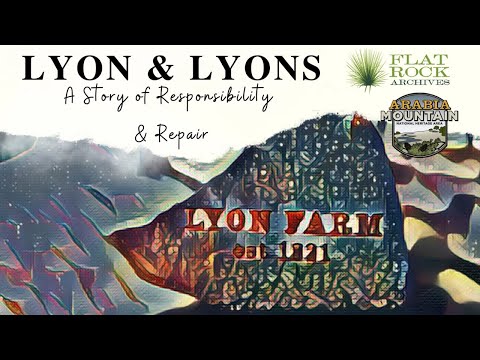
Lyon and Lyons
A Stonecrest Podcast documentary about reparations and repair, featuring a descendant of enslavers and descendants of people his family enslaved.
Watch on YouTube
Bruce Street School
A Stonecrest Podcast feature with Arabia Mountain National Heritage Area Alliance about the historic school and its community legacy.
Watch on YouTubeStonecrest today
Facts, clearly sourced.
These figures are from the U.S. Census Bureau’s Stonecrest QuickFacts table and retain the source’s stated estimate or geography vintage.